
Are Iceland Lagoons Worth the Money? An Honest Comparison
Iceland lagoons offer very different experiences depending on where you go and how much you spend.
Below, we break down the Blue Lagoon, Sky Lagoon and Forest Lagoon and our own experiences that we had to help you decide what to do when you’re in Iceland.
Read on to find out more.
Table of Contents
Introduction
Iceland lagoons are one of the country’s most talked-about experiences – from world-famous geothermal spas to quieter, nature-focused pools tucked into the landscape. But with limited time, high prices and several options to choose from, it’s not always clear which lagoon is actually worth visiting.
In this guide, we compare Iceland’s most popular lagoons to help you decide where to spend your time (and money).
Some of the pricing information includes prices that are listed in AUD with USD equivalents and are indicative only. Iceland lagoon pricing fluctuates based on season, demand and time of day.
Our Top Picks – Forest & Blue Lagoon
Forest Lagoon and Blue Lagoon stood out as our favourites for very different reasons.
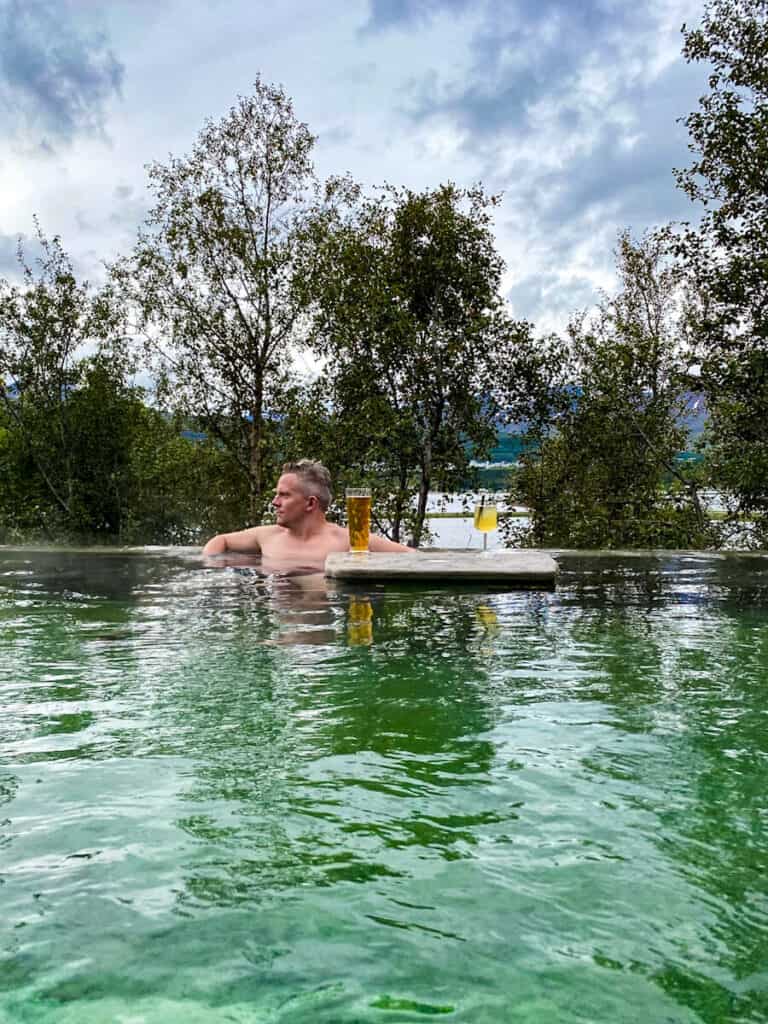
Forest Lagoon felt calm, immersive and genuinely connected to nature, with less people, a more intimate experience and stunning fjord views that made it easy to slow down and relax. Book the Forest Lagoon here: Akureyri: Admission to Forest Lagoon with Towel and Drink.
Blue Lagoon, on the other hand, delivered that once-in-a-lifetime Iceland lagoon experience – iconic scenery, silky mineral-rich water and the perfect start or end point to a trip, especially given its proximity to the airport. Book Blue Lagoon here: Blue Lagoon: Admission Package with Drink, Towel, and Mask.

Forest Lagoon
Perfect for: Iceland road-trippers already in the area wanting a calm, nature immersed lagoon experience Pros: Good value. Peaceful forest and fjord setting, gentler water on the skin and far fewer crowds Cons: Less iconic and only practical if you’re already travelling in North Iceland
Tickets should be ok but check in advance.
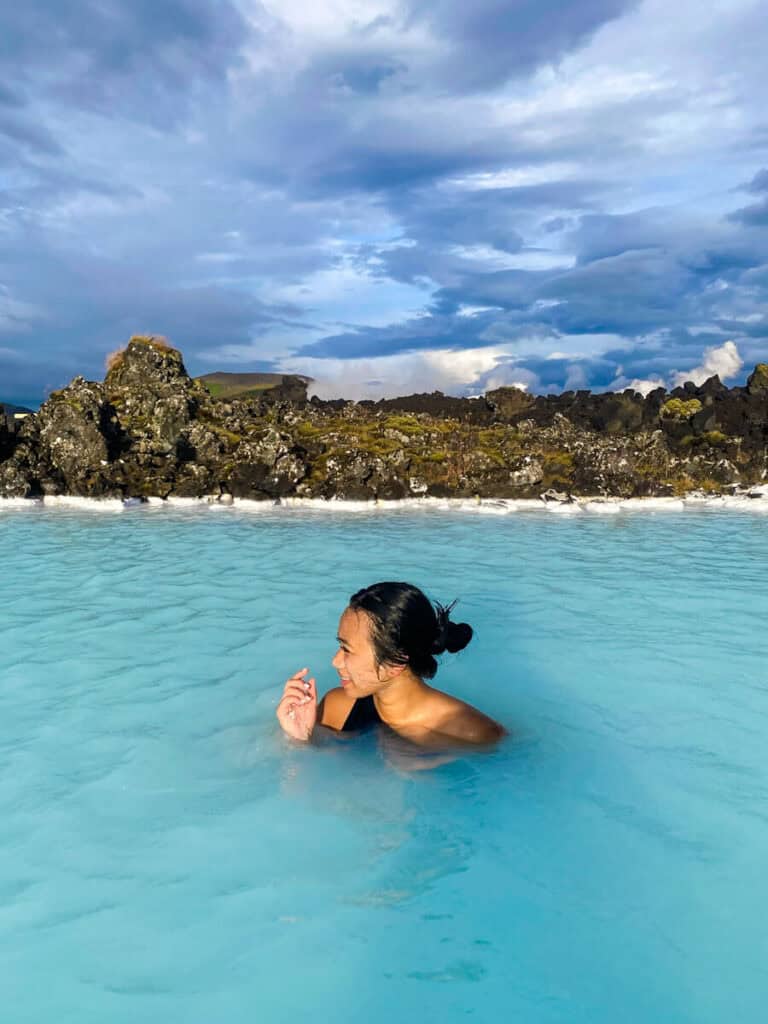
Blue Lagoon
Perfect for: First-time visitors who want Iceland’s most iconic geothermal experience Pros: Striking milky-blue water, excellent facilities and a convenient airport location Cons: Expensive, busy in peak season
Book well in advance as the Blue Lagoon experiences do book out in peak periods.
Forest Lagoon – A Hidden Hot Springs in Northern Iceland
A more natural, serene alternative:
- The Forest Lagoon is a relatively new geothermal spa near Akureyri in North Iceland, set amidst birch and pine forest with sweeping views over Eyjafjörður fjord.
Location & how to get there:
- Located ~3.6 km from Akureyri town centre, easily reached by car, taxi or free shuttle from Akureyri’s Hof Cultural Centre.
- If coming from Reykjavík, the drive to Akureyri is about 5 hours along the Ring Road.
How long to stay:
- Plan for ~2 hours for a full soak
- Add ~1 hour if you want to dine at the on-site Forest Bistro afterwards.
Best for:
- Nature lovers, North Iceland road-trippers, travellers seeking a quieter, scenic geothermal experience.
Pricing & what’s included (per adult):
- Entry ticket: ~AUD $70–$75 (USD $45–$50)
- Towel / robe rental: ~AUD $10–$20 (USD $7–$12)
- In short, Forest Lagoon is significantly more affordable than the Reykjavík-area lagoons.
How long to spend:
- Plan for ~2 hours for soaking and sauna time, or 3 hours if you add a relaxed meal or drink at the on-site bistro after your experience.
Some pictures of our experience at Forest Lagoon are below so you can get a feel for what it is like and why we recommend it!
We were lucky enough to get a spot as it is limited (like all the hot springs) so we would recommend booking it in advance. You can book it here.

Blue Lagoon – Iconic Milky-Blue Geothermal Spa
Why it’s famous:
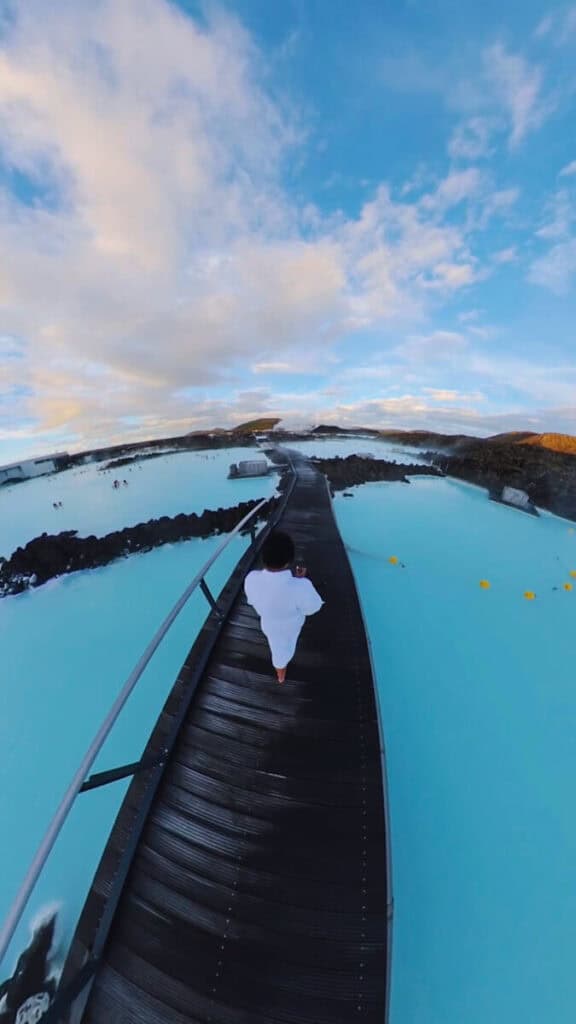
- The Blue Lagoon is perhaps Iceland’s most iconic attraction. It is a geothermal spa set in striking milky-blue waters surrounded by black lava fields.
- Its mineral-rich water (high in silica, algae and salts) is both a stunning sight and reputedly great for the skin
Location & how to get there:
- Located in Reykjanes Peninsula about 20 km from Keflavík International Airport and roughly 45–50 km from Reykjavík.
- From the airport: A 20-minute drive or shuttle transfer makes it a perfect first or last stop on your Iceland trip. (This is what we did and it was the perfect way to end our week long trip)
- From Reykjavík: Around 45–60 minutes by car or via tour shuttles.
Pricing & ticketing:
- Comfort: entry with towel, silica mud mask and drink included ~AUD $145 (from USD 95).
- Premium: includes robe and additional masks ~AUD $185 (USD 120).
- Signature or spa upgrades add extras like take-home masks or in-water treatments ~AUD $225 (USD 145+).
- Please note, prices vary by season and currency.
How long to stay:
- Most visitors spend ~2 hours, which gives plenty of time to soak, enjoy the steam rooms/sauna and have a drink at the swim-up bar.
Best for:
- First-time visitors, spa enthusiasts, anyone with limited time in Iceland.
Prices and what’s included (per adult): (2026 update pricing)
- Comfort entry: ~AUD $140–$200 (USD $95–$140)
- Premium entry: ~AUD $174 –$236 (USD $120–$166)
- Signature / upgrades: ~AUD $260+ (USD $183+)
- Pricing may vary by demand, time of day and season. Summer and sunset slots are usually the most expensive.
- We booked the Blue Lagoon 1 month in advance as we knew how quick they book out so we would recommend you book months before you go. You can book yours now here.
Our Travel tip: We booked ours at the end of our trip before our late night flight and it was a good decision considering it was not as busy during the evening. It was also during summer (Mid-August) and the sunsets are usually pretty late.
How long to spend:
- Plan for at least 2 hours to fully enjoy the lagoon, steam rooms, sauna and swim-up bar without feeling rushed.
Some pictures of our experience at Blue Lagoon are below so you can get a feel for what it is like and why it is one of the must do activities while in Iceland.
We are glad we did the Blue Lagoon at the end of our trip – and the hype is very much WORTH IT. You can feel the difference in your skin after the soak and Mon wishes she bought some skin products from their shop.


Sky Lagoon – Oceanfront Geothermal Escape Near Reykjavík
Just to be clear, Mon and I didn’t get time to go to Sky Lagoon but it was on our list.
Below is some information on this and how to get there from Reykjavik, including some basic pricing information. You can get your ticket and experience Sky Lagoon here: Sky Lagoon Entrance Pass With 7-Step Spa Ritual.
What makes it special:
- Located right on the Atlantic, Sky Lagoon delivers dramatic ocean views and a sleek, minimalist spa experience. Unlike the Blue Lagoon’s milky water, Sky’s holds a clear blue tone and emphasises the surrounding sky and sea.
Location & how to get there:
- Just ~7 km from Reykjavík city centre and is about a 15-minute drive or reachable by shuttle, bus or taxi.
How long to stay:
- Most people spend 1.5–3 hours here, though it’s possible to linger longer (up to 5 hours) especially if you plan dinner on site or a sunset soak.
Best for:
- Reykjavik visitors, sunset or Northern Lights bathing, travellers who value design and dramatic seaside views.
Pricing & what’s included (per adult):
- Standard entry: ~AUD $160 (USD $114)
- Premium / private changing facilities: ~AUD $195 (USD $140)
- Basic access typically offers entry + the seven-step ritual which is a series of hot and cool experiences designed to invigorate the body and mind.
- In summary, prices are broadly comparable to Blue Lagoon entry. In general, expect to pay for the experience at any lagoon.
- Note: The “seven-step” ritual is included in most ticket types.
Tips for Visiting Iceland Lagoons
- Book ahead: All three Iceland lagoons are popular, especially Blue and Sky. Slots can sell out weeks in advance at peak times.
- Plan your timing:
- Blue Lagoon is great right after arrival or before departure given its proximity to Keflavík airport.
- Sky Lagoon fits neatly into a Reykjavik itinerary.
- Forest Lagoon works well as part of a North Iceland loop around Akureyri or if you are doing something like our week itinerary in Iceland: One Week in Iceland How-To: The PERFECT Summer Itinerary.
- Bring essentials:
- Swimwear, towel (if you prefer your own), water to stay hydrated, and for Blue Lagoon specifically, hair-care products or clips if you plan to swim.
- For more information on what to pack for Iceland, go here: Complete Iceland Packing List for Summer: What You’ll Need.
Other Must-Do Water-based Experiences
When Mon and I went to Iceland, of course, we had a go at Forest Lagoon and Blue Lagoon. However, there are other things you can do when exploring other than Iceland lagoons.
Djúpavogskörin hot spring (small but beautiful)
Don’t miss out on this. Another free hot tub but a nice break to unwind in water and enjoy nature for a little bit. Just check on google maps if it is open or closed for maintenance.

Hidden cold plunges within the Icelandic countryside
But be careful, the water was very cold but is good for a morning wake up cold plunge!
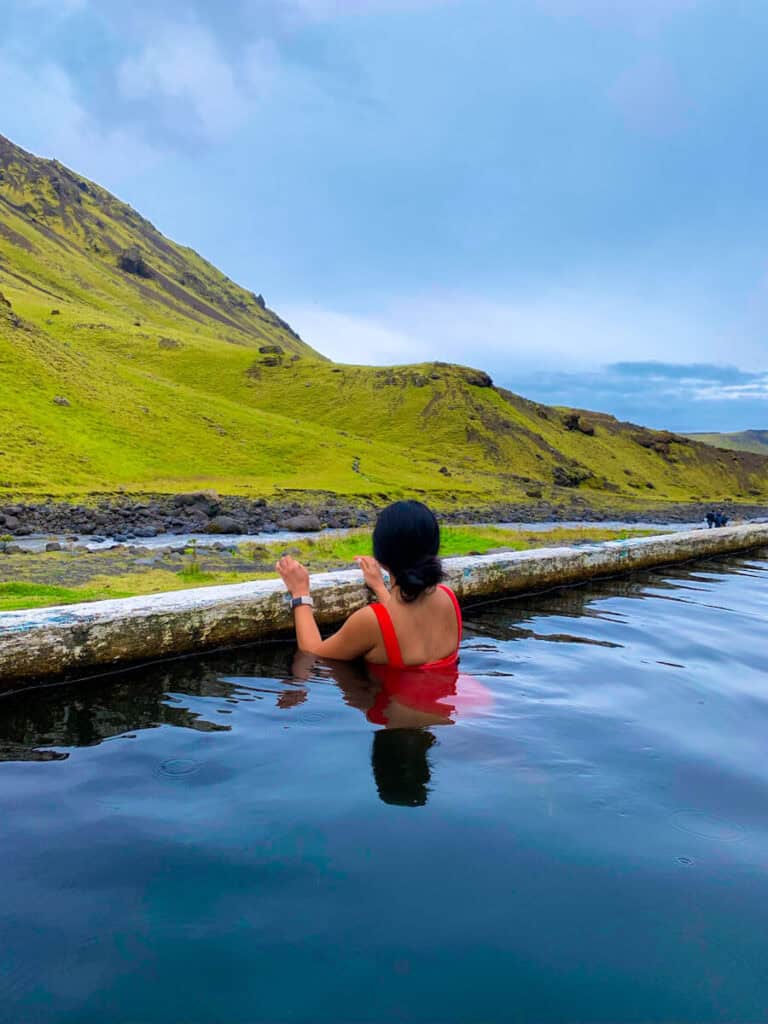


Secret Natural thermal hot springs
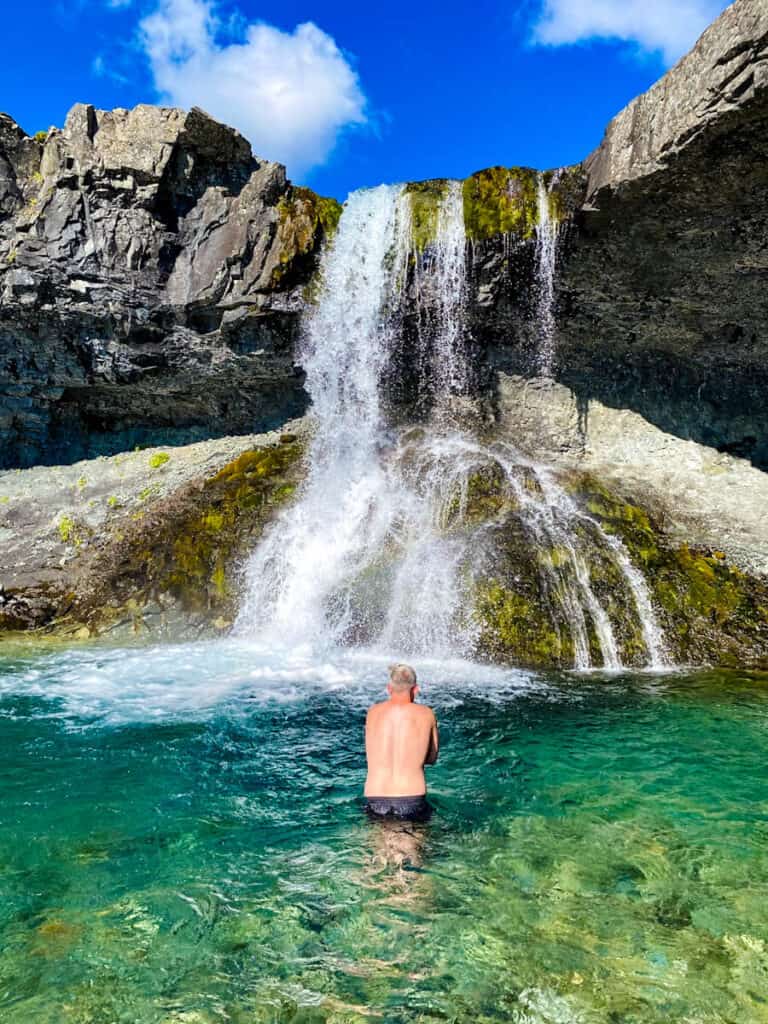
Natural thermal springs within a waterfall that had a pool with ocean views (and was safe to relax and chill out in). For this “secret” swimming location, you can find the google map location of the hidden swimming spot here!

Frequently Asked Questions
Are Iceland lagoons worth the money?
For most travellers and for us, yes, definitely. Especially if you treat them as a spa experience rather than a quick swim.
Iceland Lagoons like Blue Lagoon and Sky Lagoon are comparable in price to a premium spa day in Australia, for example, while Forest Lagoon offers excellent value for a more natural setting.
Do I need to book Iceland lagoons tickets in advance?
Yes. However, I would recommend booking in advance for Iceland lagoons, particularly for Blue Lagoon and Sky Lagoon, which often sell out days or even weeks ahead in summer.
Forest Lagoon is generally easier to access but can still fill up during peak travel periods.
How long should I spend at an Icelandic lagoon?
Plan to spend at least 1.5–3 hours at Iceland lagoons.
This allows enough time to soak, enjoy saunas or steam rooms and relax without overdoing it.
Are Iceland lagoons suitable for sensitive skin?
Generally, yes. However, experiences may vary by person and depending how sensitive your skin is.
Mon has sensitive skin (eczema), and she was fine in most of the lagoons. She even said that the Blue Lagoon felt nice on her skin afterwards.
I would recommend checking the lagoon’s website and seeing further details in case you suffer from sensitive skin.
What should I bring to an Icelandic lagoon
Most Iceland lagoons provide towels and basic facilities, but it’s still worth bringing:
- Your own swimwear
- Flip-flops or sandals or thongs in Aussie – the floors can get slippery so better not be too prepared
- A hair tie or clip
- Moisturiser for after your soak
Final Thoughts
If you’d happily spend the money on a premium spa day wherever you are from, the Blue or Sky Lagoon won’t feel out of place budget-wise.
Forest Lagoon stands out as the best value in my opinion. It is immersive, scenic and far less expensive, without sacrificing atmosphere. Plus you can enjoy a drink in a more relaxed setting rather than the business of Blue Lagoon by comparison.
To sum it all up – bring something to swim in for your Iceland adventure. Iceland lagoons are everywhere, whether it is a paid-for experience or a soak up close and personal with nature while you’re on the road in Iceland somewhere.
One thing is certain, your skin will be glowing from the benefits of the mineral content and the positive effects this will have on your body!
Let us know if this helped you choose between the lagoons – we’d love to know!
Thanks for reading,
Mon & Ryan
Check out more blog posts on Iceland below:
One Week in Iceland How-To: The PERFECT Summer Itinerary
Complete Iceland Packing List for Summer: What You’ll Need
Iceland by Van: The Ultimate Way to Experience Iceland
Travel Iceland on a Budget: Complete 8-Day Cost Breakdown
Iceland in Summer: The Ultimate Adventure Guide
12 Most Beautiful Places in Iceland You HAVE to Experience
Iceland Swimming Guide: Best Free Hot Springs & Hidden Pools
More coming soon!